
Transistor Review 2026

A podcast hosting platform focused on brands and businesses, offering multi-show hosting and private podcasting.
TL;DR
Transistor is clean, modern, and clearly aimed at brands and businesses, unlimited podcasts per account, private podcasting, four team roles, YouTube distribution, and AI transcription with speaker detection. No free plan ($19/mo), pricing scales with download caps, and there's no built-in marketing or SEO.
Quick Takeaways
What is Transistor?
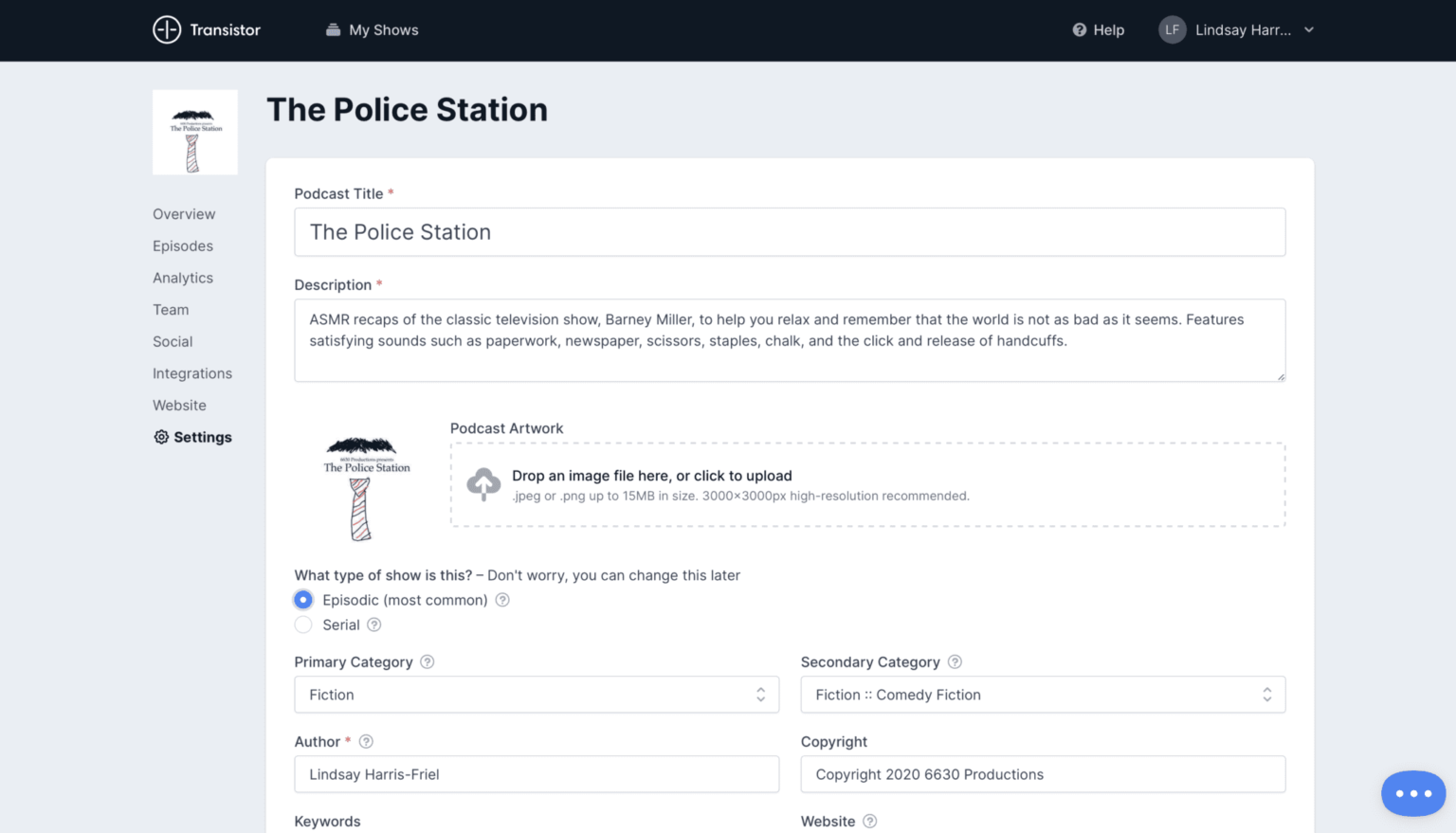
Transistor is one of those products where you can feel that the people who built it cared about the details. Justin Jackson and Jon Buda launched it in 2018 as a remote Canadian company, aimed at serious creators, brands, and businesses, and the interface is calm and quick in a way a lot of hosts aren't.
Its best trick is multi-show management, every account hosts unlimited podcasts, which is exactly what a network, a media company, or a brand running several shows needs. The private podcasting, with subscriber management, is handled just as cleanly.
Team collaboration comes with four roles, Owner, Admin, Member, and Analytics User, and the AI transcription runs on Deepgram with automatic speaker detection, which I've found more reliable than most. Distribution hits all the big platforms, YouTube and SoundCloud included.
The analytics are solid without trying to be the deepest on the market: downloads, episode comparison, audience breakdowns, subscriber estimates. Dynamic ad insertion shows up on the Professional plan with full campaign management.
The honest limitations: pricing is gated by monthly downloads (20K, 100K, 250K), there's no free plan, and there's nothing here for marketing, no clips, no newsletter, no social manager, and no podcast SEO. Transistor assumes you've already got a marketing stack and just want hosting that gets out of the way. If that's you, few do it better.
What are Transistor's biggest advantages?
Unlimited podcasts per account
Private podcasting with subscriber management
Four team roles for collaboration
AI transcription with speaker detection (Deepgram)
YouTube and SoundCloud distribution
What are Transistor's main drawbacks?
No free plan; starts at $19/month
Pricing based on monthly download caps
No marketing tools (clips, newsletter, social manager)
No podcast SEO
Limited monetization options
How does Transistor handle hosting and publishing?
On Transistor I count 8 of the 9 hosting features I track, most of the list.
Hosting isn't unlimited here, though: bandwidth/downloads are limited by plan tier. I'd factor that in if you publish often or run long-form episodes.
I can schedule episodes ahead of time and have them publish automatically at the date and time I set, which is how I prefer to work.
There's a built-in, SEO-optimized podcast website where listeners can browse and play episodes directly, one less thing I'd have to build elsewhere.
I can connect my own custom domain to that website for a more professional look.
Multi-show management is here too, so I can run several podcasts from one account, which is exactly what I need when I'm a network or juggling more than one show.
Private and unlisted episodes are supported, which I'd use for premium content, internal podcasts, or subscriber-only drops.
I can publish trailer episodes to give potential listeners a taste of the show before they subscribe.
Team collaboration is built in with role-based permissions, so I can hand teammates the right level of access, from full admin down to analytics-only.
Where does Transistor distribute your podcast?
On Transistor I count 5 of the 9 distribution features I track, most of the list.
Transistor pushes my podcast out to all the major listening apps, Apple Podcasts, Spotify, Amazon Music, Google Podcasts, and the rest. Once I publish an episode, it shows up across every connected directory on its own.
YouTube distribution is covered, which I care about more every year as video podcasting grows. My episodes can land on YouTube automatically and reach a whole separate audience.
I get a standard RSS feed generated automatically, so I keep full control of distribution and can add any other platform by hand.
Moving in from another host is painless, the one-click import tool brings over my episodes, metadata, and usually my download history.
SoundCloud distribution is there as well for a bit of extra reach.
What marketing and growth tools does Transistor offer?
On Transistor I count 4 of the 11 marketing & growth features I track.
Marketing and growth is where Transistor actually earns its place for me.
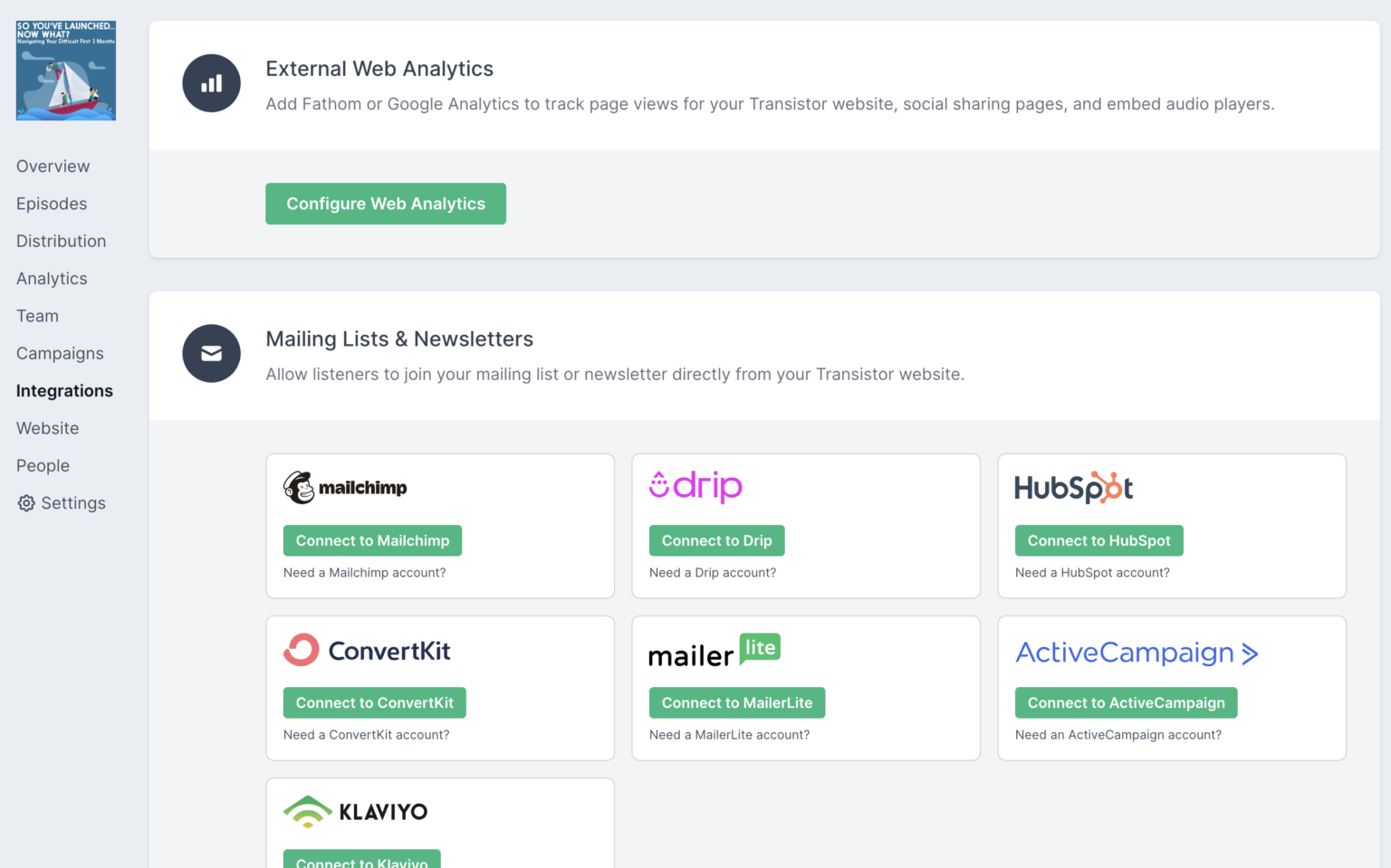
Auto-sharing posts to my connected social accounts the moment a new episode goes live, a small thing I'm glad not to do by hand.
The embeddable player is fully customizable, I can match it to my brand colors and drop it on any site or blog so visitors listen right there.
Episode chapters and markers let listeners jump around within an episode, which I always appreciate as a listener myself.
Automatic transcription turns my audio into text, better accessibility, something for search engines to index, and a head start on show notes.
What analytics does Transistor provide?
On Transistor I count 5 of the 15 analytics features I track.
Transistor's analytics aren't IAB-compliant. I still find the data useful for spotting trends, but some advertisers will specifically ask for compliant numbers.
Download tracking is the baseline I always start with, how many times each episode was pulled, and how that trends over time.
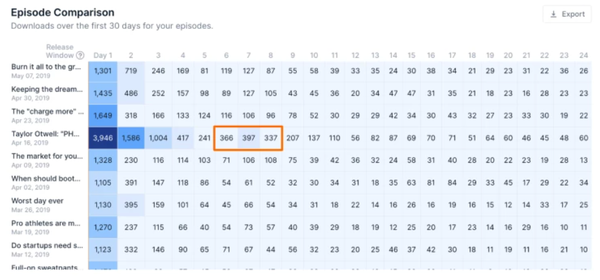
Episode comparison lets me line shows up side by side to see which topics, formats, or release times pull the most.
I can see which apps my listeners use, Apple Podcasts, Spotify, Overcast, and so on, from the audience-by-platform breakdown.
Device analytics tell me whether people listen on mobile, desktop, smart speakers, or watches, which quietly shapes how I think about length and format.
Country-level data shows me my global reach and helps me tailor content or promotion to specific regions.
It goes down to city and region level too, so I know exactly where my most engaged listeners are.
Can you make money with Transistor?
On Transistor I count 2 of the 6 monetization features I track.
Transistor gives me a few real ways to make money from a show.
Dynamic ad insertion (DAI) lets me drop pre-roll, mid-roll, and post-roll ads in programmatically. Unlike baked-in spots, I can swap or pull these anytime, so even my back catalog keeps earning, and I can target specific episodes or the whole library.
Paid subscriptions and premium content let me offer exclusive episodes, early access, or bonus content to paying listeners. That gives me recurring revenue that doesn't live and die by download numbers or ad rates.
Does Transistor offer podcast SEO (PSO) tools?
I couldn't tick any of the 4 podcast seo (pso) features I track on Transistor.
Transistor doesn't include podcast search optimization (PSO) tools. To climb in podcast-app search, I'd be doing my keyword research by hand or leaning on outside tools for my titles, descriptions, and tags.
What AI features does Transistor have?
On Transistor I count 1 of the 5 ai features features I track.
AI has become part of how I work, and Transistor folds in tools to speed up content creation.
AI transcription turns my audio into text and labels each speaker automatically, so the transcript is immediately usable as show notes, a blog post, or accessibility content.
Is Transistor ready for teams and enterprises?
On Transistor I count 2 of the 6 enterprise & security features I track.
For bigger teams and organizations, Transistor brings some enterprise-grade muscle.
A REST API with webhooks lets me wire publishing and analytics into my own tech stack, CMS, or custom workflows.
White-label branding lets me strip the platform's branding and apply my own for a fully branded experience.
Full GDPR compliance means European listener data is handled properly, with the right consent and processing in place.
Which features does Transistor support?
Hosting
8/9Distribution
5/9Marketing & Growth
4/11Analytics
5/15Monetization
2/6Support & Community
4/6Podcast SEO (PSO)
0/4AI Features
1/5Enterprise & Security
2/6Recording & Production
0/4Who is Transistor best for?
Brands, businesses, and professional podcasters who need multi-show management, private podcasting, and team collaboration on a clean platform.
What are the best Transistor alternatives?
Transistor vs Spotify for Creators
Spotify for Creators scores 35/75 features, the same as Transistor. Spotify's free podcast hosting platform (formerly Anchor), offering free unlimited hosting, video podcasts, distribution, and monetization through the Spotify Partner Program. Spotify for Creators offers a free plan, while Transistor starts at $19/month.
Transistor vs RSS.com
RSS.com scores 36/75 features, 1 more than Transistor. A straightforward podcast hosting platform focused on simplicity and ease of use for beginners. RSS.com offers a free plan, while Transistor starts at $19/month.
Transistor vs RedCircle
RedCircle scores 34/75 features, 1 fewer than Transistor. A free podcast hosting platform with built-in monetization tools including cross-promotion and ad marketplace. RedCircle offers a free plan, while Transistor starts at $19/month.
Is Transistor worth it?
By my count, Transistor covers 35 of 75 features, which puts it #13 of 15 hosts I compared.
Brands, businesses, and professional podcasters who need multi-show management, private podcasting, and team collaboration on a clean platform.
That puts it mid-pack, and honestly that's the right amount for a lot of podcasters. Transistor handles the essentials and a few advanced extras without charging you for features you'll never touch.
Check my full rankings to see how Transistor stacks up against all 15 hosts I compared.
David is an acquisition expert at Ausha, where he focuses on building growth strategies across both inbound and outbound channels. His career path took him to Australia before joining Ausha in 2023. He launched Allez!, the first French-language podcast entirely dedicated to climbing, which has reached over 120,000 downloads and more than 1 million views on social media, demonstrating his ability to build and grow a media project from a niche audience.
FAQs about Transistor
What is Transistor?
A podcast hosting platform focused on brands and businesses, offering multi-show hosting and private podcasting. It launched in 2018 and covers 35 of 75 features in my comparison, ranking #13 of 15.
How much does Transistor cost?
Transistor starts at $19 a month. There's no free plan, though you may find a free trial.
What are Transistor's main strengths?
The strengths I'd call out: Unlimited podcasts per account; Private podcasting with subscriber management; Four team roles for collaboration.
What are Transistor's main limitations?
The limitations I'd flag: No free plan; starts at $19/month; Pricing based on monthly download caps; No marketing tools (clips, newsletter, social manager).
Is Transistor good for beginners?
Yes, in my view, one-click distribution and scheduled publishing make Transistor approachable for first-timers.
See our complete platform ranking to compare all 15 options.